
A word from the Director
The Evolving Arctic Through My Personal Lens
My interest in the Arctic goes back to the Cold War (1980s) and my involvement in peace research, including at the Tampere Peace Research Institute (TAPRI) in Finland, while I was writing my PhD in political science on the peace movement (1988).
Already at that time – and indeed since the beginning of the Cold War in the 1950s – it was obvious that the Arctic was not merely a regional matter. The Cold War was global in nature and had relatively little to do with the Arctic as such. Rather, the Arctic was one of the places where the two superpowers, the United States and the Soviet Union, directly confronted each other. This historical legacy explains why the Arctic became, and to a considerable extent remains, one of the world's most strategically militarized regions. Suffice it to mention the establishment of the US Thule Air Base in Greenland in 1951 and the Soviet Union's nuclear submarine base in Murmansk. NATO, created in 1949 under American leadership, also became a central element of the military and strategic architecture of the Arctic. At that time, however, two Nordic countries – Finland and Sweden – remained outside NATO, pursuing policies of military non-alignment.
With Mikhail Gorbachev's Murmansk speech in 1987, in which he called for the Arctic to become a "zone of peace", and especially following (what was then hoped to be) the end of the Cold War in 1991, the Arctic paradoxically became, for a while, much more of a regional matter. The idea of the Arctic as a zone of peace translated, in practice, into an agenda of environmental protection and sustainable development, also reflecting the broader international context of the 1992 Rio Conference. This regional approach was institutionalized with the creation of the Arctic Council in 1996. Interestingly, one of the foundations of the Arctic Council was a Finnish initiative launched in 1989: the Rovaniemi Process, which focused on environmental protection, particularly transboundary pollution, the ozone layer over the Arctic and nuclear contamination inherited from the Cold War. The resulting Arctic Environmental Protection Strategy (AEPS) was adopted in 1991.
The Arctic Council was indeed an original institutional construct. It brought together the eight Arctic states while providing a particularly important role for Indigenous peoples through their status as Permanent Participants. It also allowed non-Arctic countries and other organisations to participate as observers. To a certain extent, this post–Cold War system of regional Arctic governance had already laid the foundations for what we would later call the Global Arctic, even though the Arctic states understandably sought to retain ownership of the region's sustainable-development agenda.
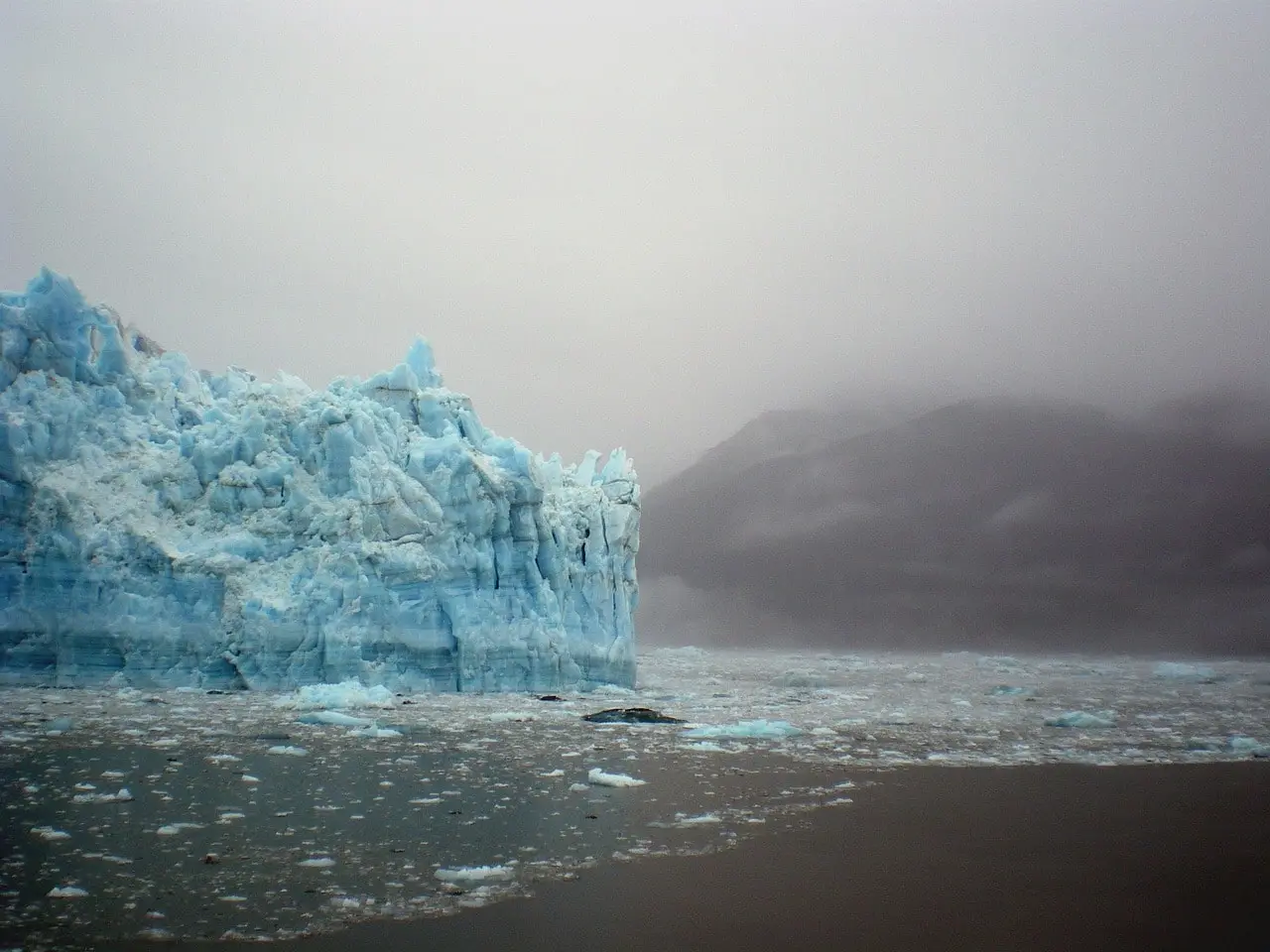
It took the growing global awareness of climate change, particularly during the early 2010s, to bring the Arctic more decisively onto the global stage. Climate change introduced a fundamentally different way of looking at the region, grounded in Earth-system science and Global Change research. The Arctic was no longer simply a geographically remote region or a geopolitical space. It had become a critical component of global Earth-system dynamics, with several major tipping elements, including the receeding of the Greenland ice sheet, of Arctic sea ice, and of the permafrost, potentially triggering far-reaching global consequences.
At the same time, the Arctic itself was being profoundly transformed by global warming. The retreat of ice was opening up new possibilities for economic activity, particularly the exploitation of natural resources, including energy and minerals, as well as shipping. This created what has been described as the "Arctic paradox": the very climate change threatening the region's ecosystems and communities is also creating new economic opportunities and geopolitical interests. It is in this context that the Arctic increasingly came to be seen as a „laboratory of the Anthropocene“.
It was also during this period, 2013/2014, that we started our GlobalArctic project, more or less at the same time as the then Icelandic President Ólafur Ragnar Grímsson's launched the Arctic Circle initiative and Assembly. With President Grímsson, we had an identical vision: to create a genuinely global platform, where Arctic stakeholders from around the world could openly discuss all Arctic-related matters. Such stakeholders include Indigenous peoples, academia, national governments, local and regional authorities, Arctic Council member states, observer states and non-observer states, businesses, NGOs and international organisations.
However, shortly thereafter the broader geopolitical context began to change, initially slowly and almost imperceptibly, but increasingly rapidly and radically. Poland's accession to NATO in 1999, NATO‘s expansion to Estonia, Latvia and Lithuania in 2004, Russia's annexation of Crimea in 2014, the Ukraine war since 2022, the incorporation of Finland in 2023 and Sweden in 2024 into NATO, and most recently the extension of military and foreign policy control by the US over Greenland (2026) have fundamentally altered the geopolitical configuration of the Arctic. The region is once again divided, this time between a NATO-aligned Arctic, comprising seven of the eight Arctic states, and the Russian Arctic.
This new division resembles the old Cold War Arctic, but its underlying dynamics are different. The confrontation is no longer primarily ideological. It is increasingly shaped by strategic competition over military interests, natural resources, transport routes and infrastructure, as well as by both the regional (Arctic) and the global consequences of global warming. Consequently, stakes are much higher and stakeholders are more numerous.
At this point, it is useful to distinguish between „three different Arctics“, namely (1) a regional Arctic as a relatively distinct geographical and political space with its institutions, actors, and sustainable development agenda (as of the 1990s), (2) a global Arctic as an integral and critical part of the Earth system as well as the global economy with global scientific, economic, and civil society actors and global governance aspirations (as of the 2010s), and (3) a geopolitical Arctic dominated by nation-states‘ interests and their strategic international relations (as of the 2020s). But it is this third, geopolitical Arctic that today largely prevails. To a certain extent, we are back to the Cold War Arctic, but this time the rift is deeper, and the war is warmer. This is the result of 30 years of global warming, especially in the Arctic, as well as of the world‘s hunger and race for resources, now including Arctic resources. It is also the result of the growing global divide between „the West and the Rest“, now also being played out in the Arctic in the race for fossil fuels and rare earth minerals.
As a result of this divided Arctic, indigenous peoples can no longer meet, except in neutral non-Arctic states, Arctic climate, Biosphere, and other Earth System relevant data are no longer shared or even collected and therefore no longer acted upon, whereas Arctic infrastructures are now being securitized, while Arctic energy and minerals resources are being weaponized. Not to mention the militarization of the minds of almost all the Arctic actors and stakeholders. It is therefore more important than ever to maintain and further develop our GlobalArctic project as a truly global platform, one that remains open to all Arctic stakeholders, regardless of their national affiliations or geopolitical alignments so as to reflect the perspectives and concerns of the three Arctics.
Matthias Finger
Co-founder and Director of the GlobalArctic Project